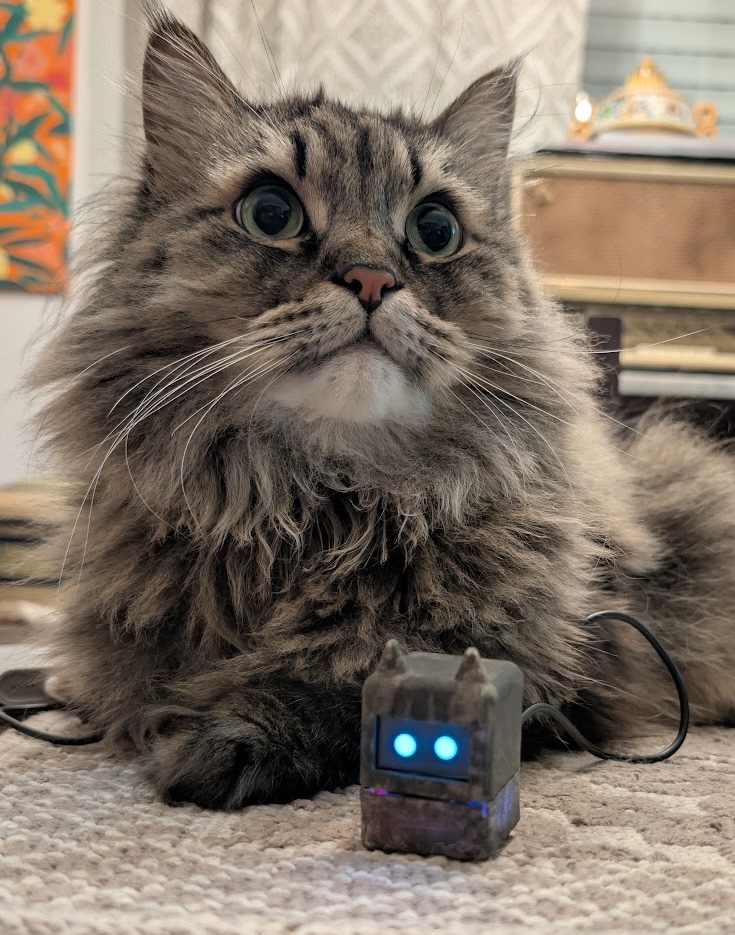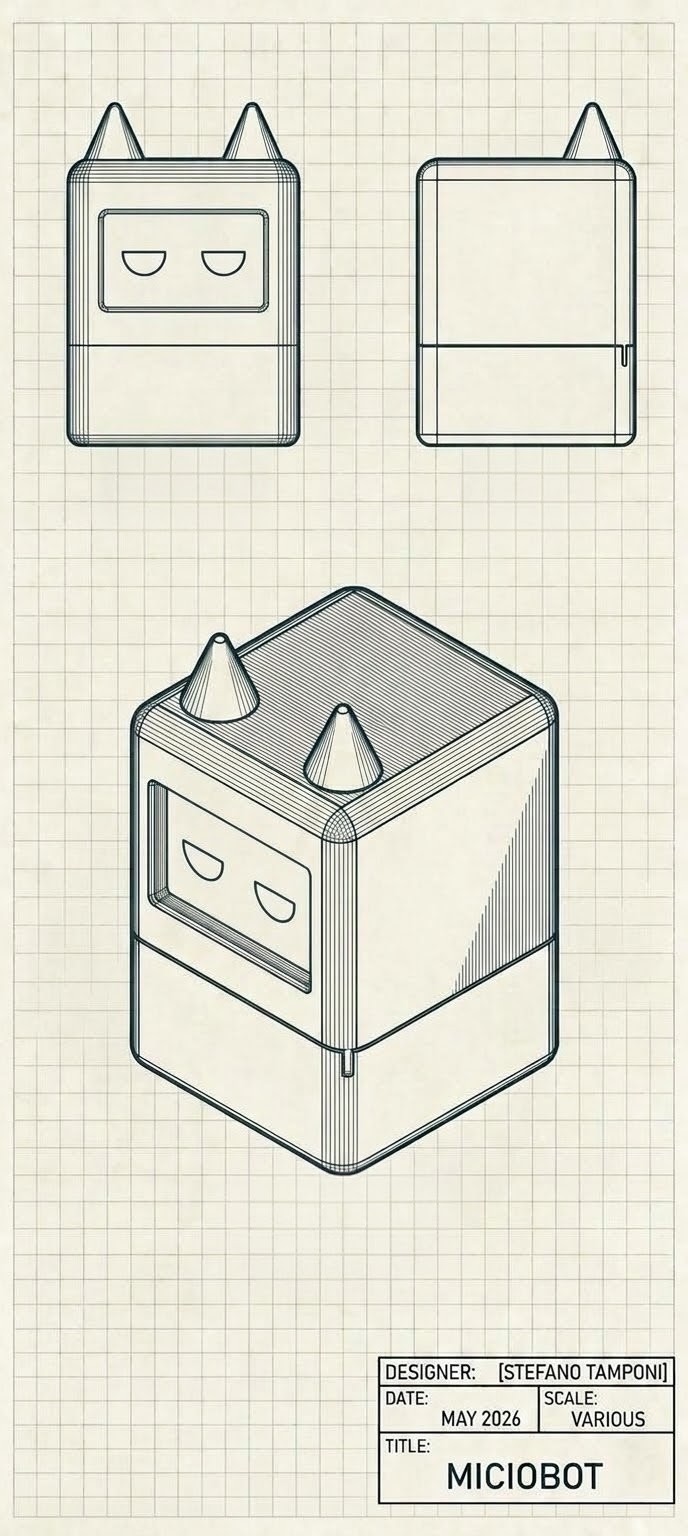
Miciobot is a small desktop companion designed to turn a handful of electronics into something that feels alive. It is not a large robot or an industrial prototype: it is a compact, cat-shaped object meant to sit on a desk, blink at you and remind you that even small devices can carry personality.
Core Components
- ESP32-C3 SuperMini
- 0.96" OLED Display
- USB-C Power / Charging Port
- 3D-Printed Cat Shell
- Jumper cables
Designing for Personality, Not Just Hardware
The project started from a simple constraint: fit a microcontroller, a small display, a power circuit, and enough structure inside a tiny cat-like body. That meant choosing compact electronics and measuring carefully. Every millimetre mattered: the body had to be cute and functional. The result is a design that feels intentionally playful while remaining practical.
The 3D-Printed Shell
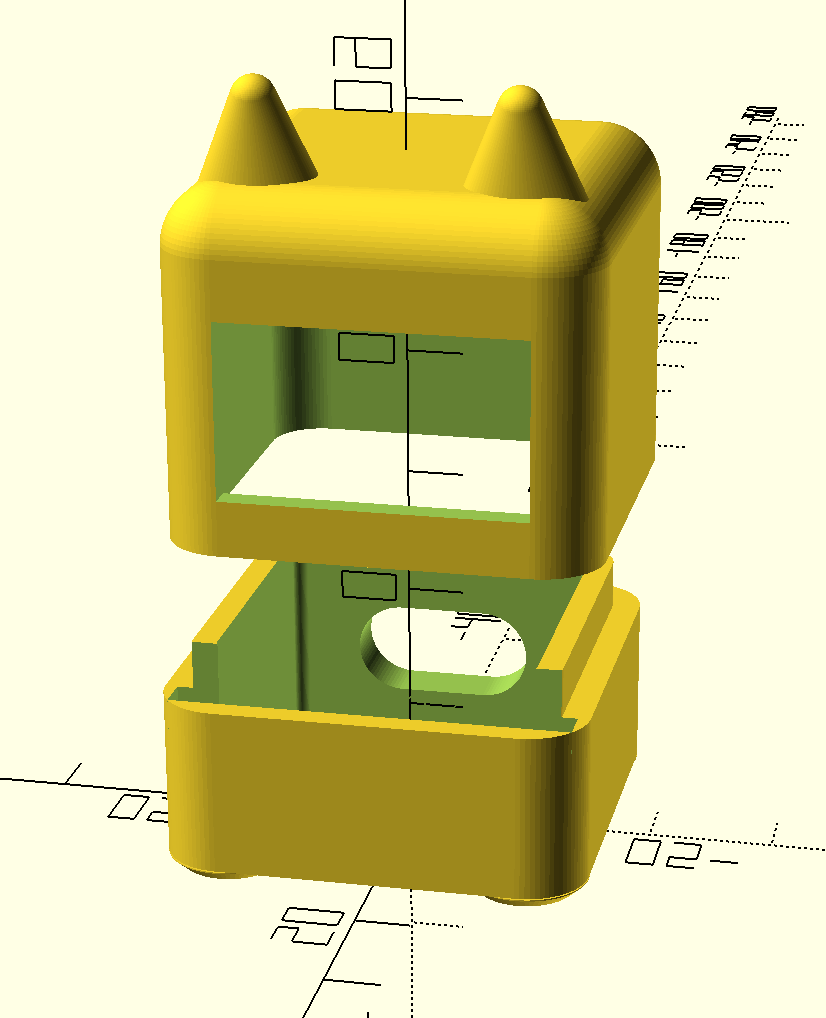
Miciobot's case is a compact, modular enclosure built around its internal requirements. The body and head are designed as separate printed pieces to simplify assembly and serviceability, while the rounded silhouette keeps the robot recognizably feline.
Eyes That Speak Before Words
The OLED display is the emotional center of the robot. Instead of a complex face with moving parts, the device communicates through a clear set of eye states: idle, happy, angry, sleepy, surprised, skeptical, curious, in love, or dizzy. This gives Miciobot a fast, readable visual language: its mood can change instantly and remain clear at a glance. In a compact object, expression becomes the interface.
A Small Computer With a Mood Engine
The firmware runs an internal mood system that changes the eye animation over time. Some states are manual and reactive via serial interface, while others are generated autonomously to create a sense of life when there is no external input. This subtle behavior makes the robot feel less like a static object and more like an attentive desk companion. The system is intentionally simple, but the effect is surprisingly strong: tiny visual changes create a strong emotional impression.
A Personal Object That Feels Alive
Miciobot sits at the intersection of physical design, embedded software, and playful interaction. It is a project about reducing complexity to the essentials: a simple body, a focused display, a few electronic components, and a strong visual personality. The result is a tiny robot that does not try to be a full autonomous system; it is instead a small, memorable companion that makes the invisible layers of engineering feel tangible and fun.
Project Gallery
03 IMAGES / CLICK TO VIEW-
01
Front View
The compact cat-shaped form and the expressive OLED face that define the robot's character. And a curious cat, of course.
-
02
Animated Eye Expressions
The OLED cycles through Miciobot's expressive eye states, bringing its small personality to life.
-
03
Rear View
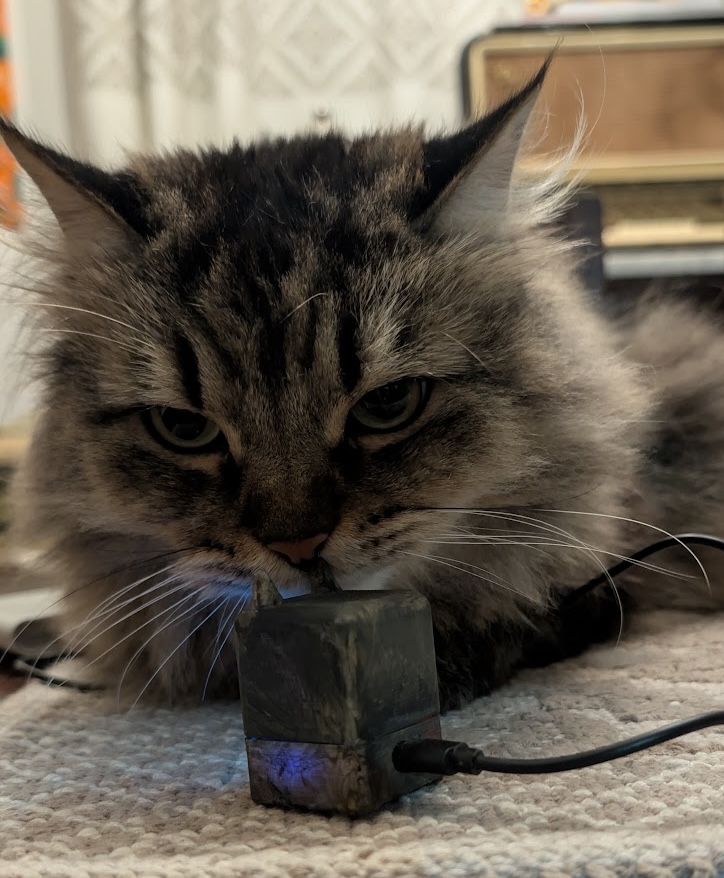
The back of Miciobot, with its beautiful serial tail. The prototype's cat-inspired paint finish was not carried over to the final design, though it was a nice touch.